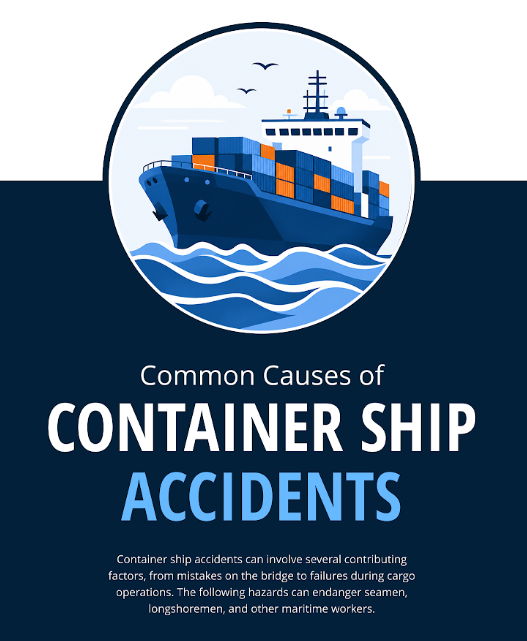
Container ships are among the largest vessels on the water, and their crews work with massive cargo loads, heavy machinery, and hazardous materials. When navigation mistakes, unsafe working conditions, or poor safety decisions lead to an accident, identifying the cause can help injured maritime workers determine who may be responsible.
Quick Answer: What Are the Common Causes of Container Ship Accidents?
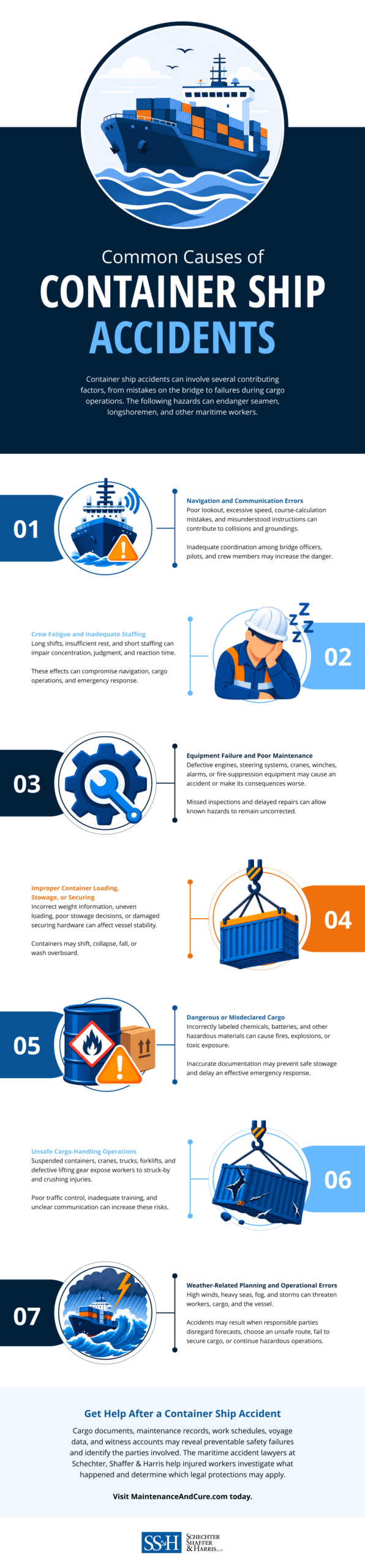
Common causes of container ship accidents include:
- Navigation and communication errors
- Crew fatigue and inadequate staffing
- Equipment failure and poor maintenance
- Improper container loading, stowage, or securing
- Dangerous or mis declared cargo
- Unsafe cargo-handling operations
- Weather-related planning and operational errors
These failures can contribute to collisions, groundings, fires, explosions, container stack collapses, and serious injuries during loading or unloading.
Container Ship Accidents Often Have Multiple Causes
A container ship accident rarely results from one isolated mistake. A collision blamed on fog may also involve excessive speed, poor bridge communication, a fatigued lookout, or faulty navigation equipment. A fallen container may point to incorrect weight information, unsafe stowage, damaged securing hardware, or errors during loading.
Shipboard crews and longshoremen also work near suspended containers, cranes, forklifts, trucks, winches, and other heavy equipment. Poor traffic control, unclear communication, inadequate training, or defective machinery can cause struck-by, crushing, and fall injuries.
Cargo can create additional dangers. The International Maritime Organization warns that undeclared or incorrectly declared container weights can lead to improper stowage, collapsed container stacks, vessel instability, and worker injuries. Misdeclared hazardous materials may contribute to fires, explosions, or toxic exposure.
Evidence May Reveal Preventable Safety Failures
Determining why an accident happened may require investigators to review:
- Cargo plans and weight declarations
- Maintenance and inspection records
- Crew schedules and training documents
- Weather forecasts and voyage plans
- Safety procedures and incident reports
- Voyage data and witness statements
This evidence may reveal negligence, an unseaworthy vessel, defective equipment, or another preventable failure. Depending on the facts, responsibility may rest with a shipowner, employer, vessel operator, cargo company, contractor, manufacturer, or another party.
How Maritime Law Applies After a Container Ship Accident
Maritime law, also known as admiralty law, may provide different legal protections based on a worker’s duties and connection to the vessel. Injured seamen may have rights under the Jones Act and general maritime law, while longshoremen and other qualifying maritime employees may be eligible for benefits under the Longshore and Harbor Workers’ Compensation Act.
The cause of the accident, the worker’s employment status, and the parties involved can affect which legal options are available.
The experienced maritime accident lawyers at Schechter, Shaffer & Harris help injured maritime workers and their families investigate container ship accidents and determine which laws may apply to their injuries.