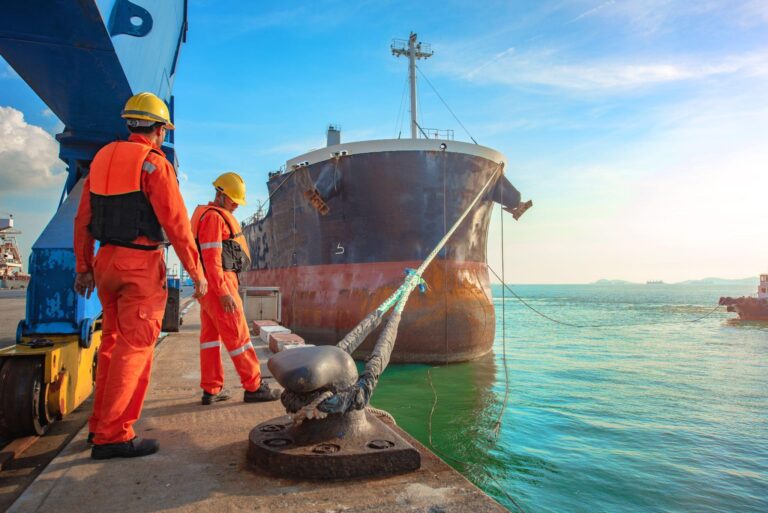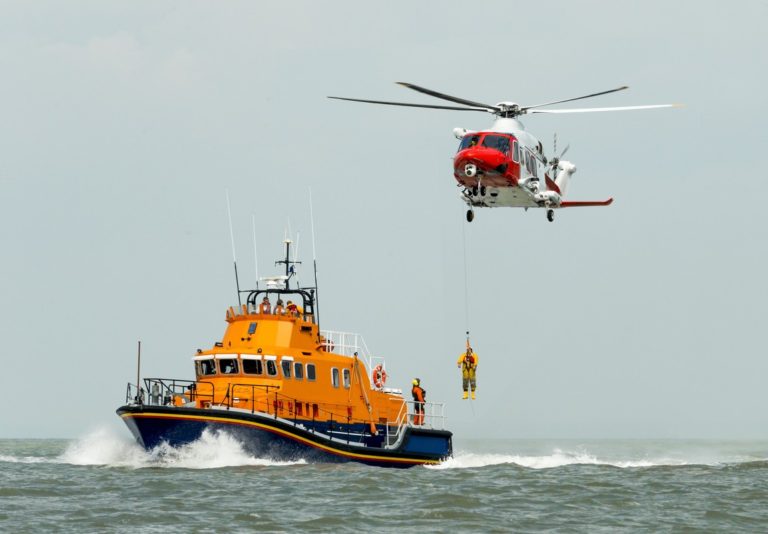
Offshore wind farms are expanding at a rapid pace, placing more workers in physically demanding offshore roles. Crews routinely handle turbine maintenance, vessel transfers, ladder climbing, and heavy equipment while working far from shore in unpredictable marine environments.
Recent research shows that injury rates in the offshore wind industry are up to four times higher than those in offshore oil and gas. Both industries involve remote worksites, hazardous equipment, and difficult access conditions. A higher injury rate suggests that current safety measures may not be keeping pace with the industry’s rapid growth.1
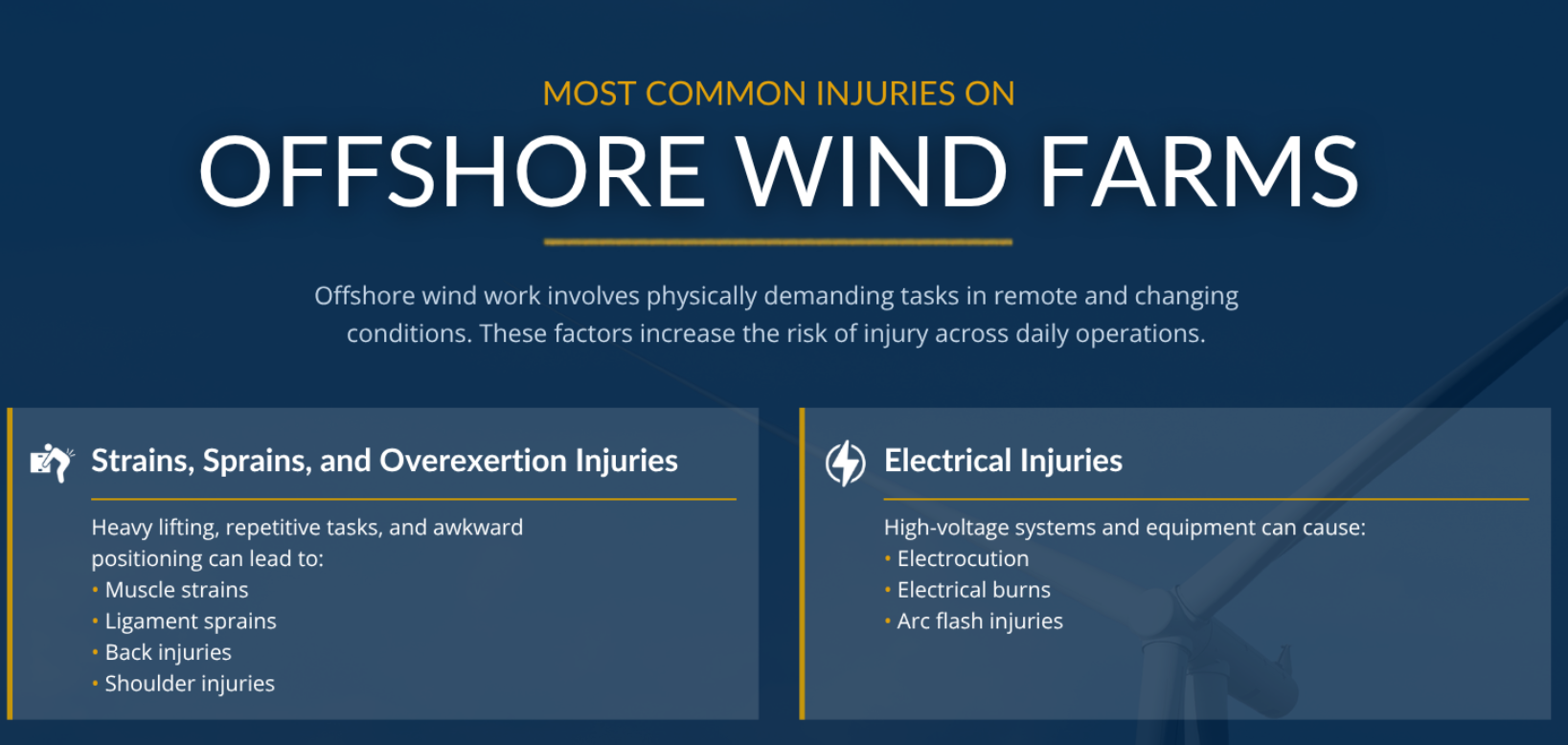
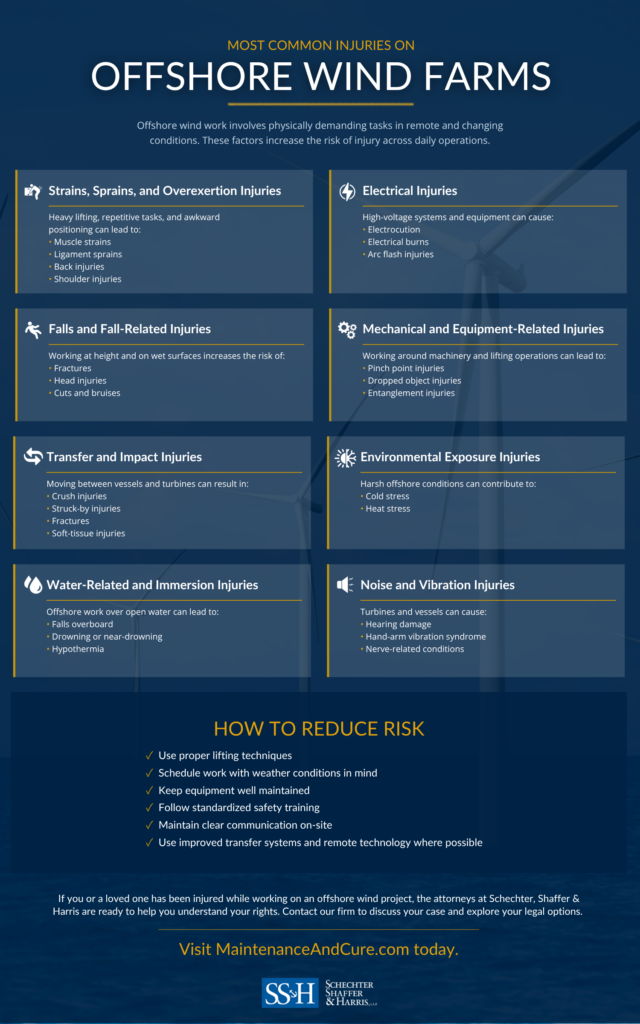
Many offshore injuries develop through repeated physical stress and exposure to hazardous work environments. Workers often move equipment through confined spaces, climb multiple turbine levels during a shift, and perform maintenance around high-voltage systems and moving machinery. These tasks increase the risk of falls, electrical injuries, overexertion injuries, dropped object incidents, and other serious accidents.2
As offshore wind projects continue to move into more remote areas, workers face longer travel distances, more complex maintenance demands, and greater exposure during offshore operations. Strong offshore wind safety procedures, proper training, and effective risk management remain critical for reducing injuries across the industry.
Injured While Working Offshore? Talk to an Experienced Offshore Accident Lawyer
If you were injured while working on an offshore wind project, Schechter, Shaffer & Harris can help you take action. A maritime injury lawyer from our firm can review the facts, identify liable parties, and explain your options under maritime law. Offshore injury claims often involve employers, contractors, and vessel operators, which can make the process more complex.
Contact the offshore injury lawyers at Schechter, Shaffer & Harris today to discuss your case and move forward with a clear plan.
Sources
- Rowell D, McMillan D, Carroll J. Offshore wind H&S: a review and analysis. Renew Sustain Energy Rev. 2023 Oct 21. doi:10.1016/j.rser.2023.113928.
- Transportation Research Board. 2013. Worker Health and Safety on Offshore Wind Farms – Special Report 310. Washington, DC: The National Academies Press. doi:10.17226/18327.