
Key Takeaways
- Third-party maritime injury claims allow injured workers to pursue compensation from parties other than their employer when outside negligence contributed to the accident.
- A Jones Act claim primarily focuses on employer negligence, while a third-party maritime negligence claim involves outside parties such as contractors, vessel owners, or equipment manufacturers.
- Some offshore accidents may involve both a Jones Act claim against an employer and a third-party offshore injury claim against another party.
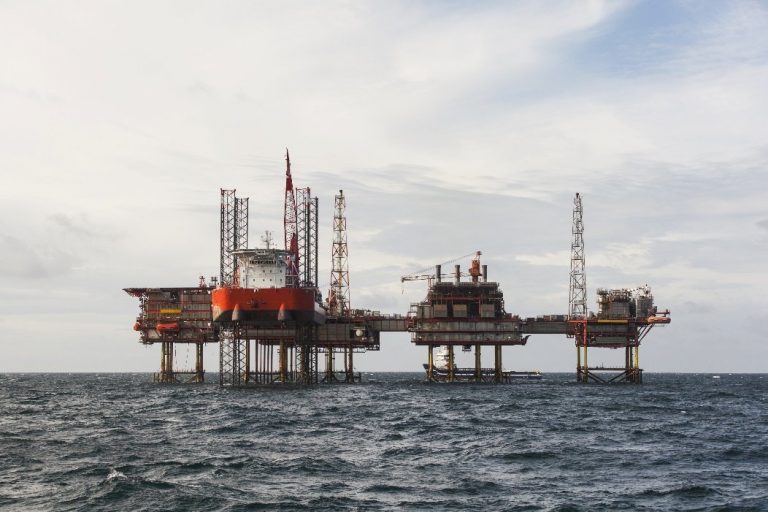
Maritime injury claims are not always limited to an employer. Offshore accidents often involve multiple companies working on the same vessel, platform, or job site. When another company’s negligence contributes to an injury, an injured maritime worker may have a third-party maritime injury claim in addition to other maritime remedies.
Who Can Be Sued in a Maritime Injury?
Several parties may potentially face liability in a maritime injury case depending on how the accident occurred.
Potentially liable parties may include:
- Vessel owners
- Equipment manufacturers
- Offshore contractors
- Subcontractors
- Cargo loading companies
- Crane operators
- Maintenance providers
- Dock or terminal operators
What Is a Third-Party Maritime Injury Claim?
A third-party maritime injury claim is a legal action against a person or company other than the injured worker’s employer.
These claims arise when an outside company or individual contributes to a maritime accident through negligent conduct, unsafe operations, defective equipment, or other safety failures.
Common Situations That Lead to Third-Party Maritime Injury Claims
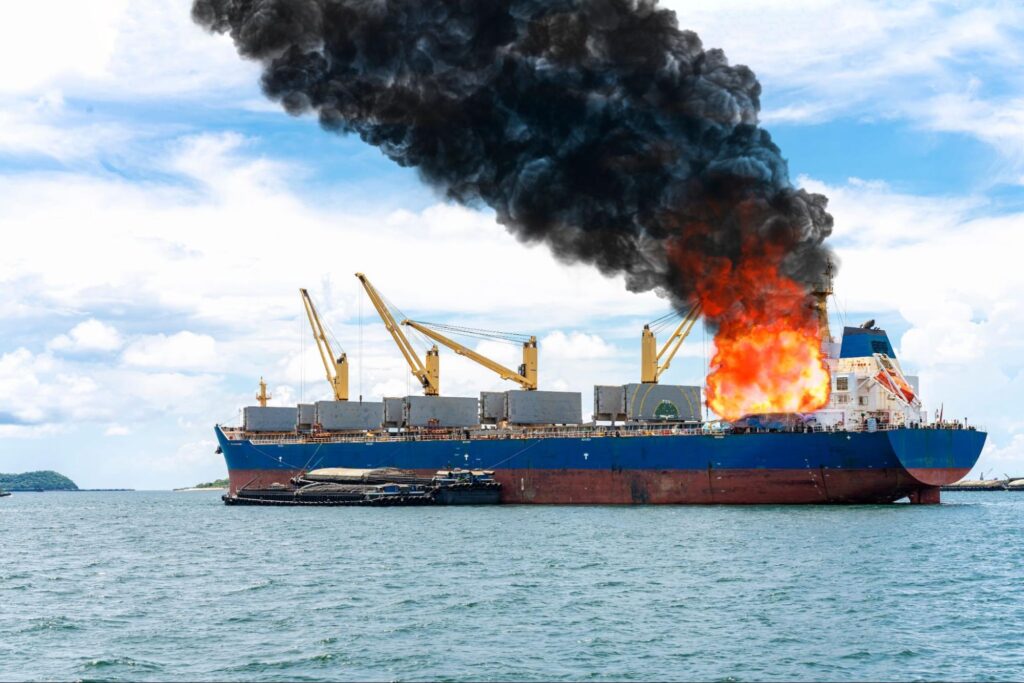
Third-party liability appears in many types of offshore and maritime accidents.
Defective Equipment Accidents
Offshore workers rely on complex machinery and heavy equipment every day. Cranes, winches, lifting systems, safety harnesses, ladders, valves, and hydraulic systems may all create serious hazards if they fail.
If defective equipment causes an injury, the manufacturer, distributor, or maintenance company may face liability.
Examples include:
- Defective crane components
- Faulty pressure systems
- Malfunctioning safety devices
- Exploding equipment
- Defective cables or rigging systems
These cases often involve product liability issues alongside maritime law claims.
Vessel Collisions
Some maritime injuries happen because another vessel operator acts negligently.
A tugboat operator, commercial shipping company, supply vessel captain, or recreational boater may cause a collision that injures offshore workers or crew members aboard another vessel.
In these situations, injured workers may pursue claims against the operator or owner of the at-fault vessel.
Contractor Negligence Offshore
Many offshore platforms and drilling operations involve several contractors performing different tasks at the same time.
One contractor’s unsafe conduct may place workers from another company at risk.
Examples may include:
- Unsafe crane operations
- Improper welding practices
- Failure to secure equipment
- Unsafe scaffolding
- Electrical hazards created by another contractor
When a contractor’s negligence contributes to an injury, that company may face a third-party claim even if it was not the worker’s employer.
Cargo and Loading Accidents
Improper cargo handling can create dangerous offshore conditions.
Cargo may shift during transport, fall during lifting operations, or strike workers during loading and unloading procedures. Third-party claims may arise against cargo companies, loading crews, or vessel operators responsible for unsafe cargo operations.
These accidents are especially common in port environments, offshore supply operations, and commercial shipping activities.
What Must Be Proven in a Third-Party Maritime Injury Claim?
Like most negligence cases, third-party claims generally require proof that another party failed to act with reasonable care.
An injured worker typically must show:
- The third party owed a duty of care
- The third party acted negligently or unreasonably
- That negligence contributed to the accident
- The worker suffered damages as a result
Evidence in these cases often includes:
- Accident reports
- Maintenance records
- Vessel logs
- Safety inspection reports
- Witness testimony
- Equipment testing records
- Offshore safety procedures
- Expert analysis
Maritime accident investigations may become complicated because multiple companies are often involved in offshore operations.
What Compensation May Be Available?

Third-party maritime injury claims may allow injured workers to recover damages beyond basic maintenance and cure benefits.
Depending on the circumstances, compensation may include:
- Medical expenses
- Lost income
- Loss of future earning capacity
- Physical pain
- Mental anguish
- Physical impairment
- Disfigurement
- Rehabilitation costs
In fatal maritime accidents, surviving family members may also pursue wrongful death claims in some situations.
The damages available can differ depending on the type of maritime accident claim involved and the laws that apply to the case.
Jones Act vs. Third-Party Claims: What Is the Difference?
The Jones Act applies to qualifying seamen who suffer injuries because of employer negligence. A Jones Act claim is brought against the worker’s employer.
A third-party maritime injury claim, by contrast, targets an outside individual or company that contributed to the accident.
For example, a deckhand may work for one offshore company but suffer injuries after defective lifting equipment supplied by another contractor fails during cargo operations. In that situation, the injured worker may have:
- A Jones Act claim against the employer if employer negligence played a role
- A separate third-party claim against the equipment manufacturer or contractor
Can a Worker File Both a Jones Act and Third-Party Claim?
Yes. Some injured maritime workers may have both claims available at the same time.
For example, an offshore worker may allege that:
- Their employer failed to provide a reasonably safe work environment
- A third-party contractor created a dangerous condition
- A manufacturer supplied defective equipment that contributed to the accident
Maritime injury cases often involve overlapping liability between several companies. Determining who may be legally responsible requires a detailed investigation into the accident, worksite conditions, contracts, and vessel operations.
Talk to an Experienced Maritime Injury Lawyer

After a serious offshore accident, identifying every potentially responsible party can make a major difference in the compensation available. The attorneys at Schechter, Shaffer & Harris investigate maritime accidents involving contractors, vessel operators, equipment manufacturers, and other third parties to help injured workers pursue every available recovery option.
If you need guidance on how to file a third-party claim, evaluate a potential personal injury claim, or better understand the maritime injury claim process, our team is prepared to help.