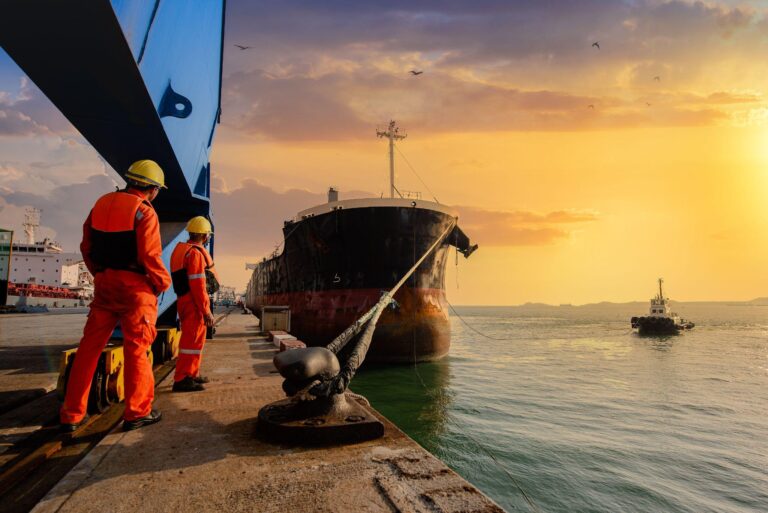

Working at sea comes with real risks. Maritime jobs often involve dangerous conditions and high stress. When something goes wrong, the impact is not always physical. Emotional distress can affect your ability to work and live normally. We help maritime workers understand their rights and pursue claims when emotional harm follows a serious incident.
Can You Sue for Emotional Distress as a Maritime Employee?
You can only sue for emotional distress at sea under specific conditions. We evaluate each case based on how the distress occurred and the legal standards that apply.
We can bring a claim against your employer if:
1. You Were Within the Zone Of Danger
Courts often require that you were at immediate risk of physical harm. This is known as the zone of danger rule. If you were close enough to be injured during an accident, and that experience caused emotional trauma, you may have a valid claim.
For example, surviving a vessel collision or near-drowning can lead to serious psychological effects.
If the event did not put you in direct danger, the claim becomes harder to prove. Courts also look at whether you actually feared for your own safety at the time.
2. The Emotional Distress Is Linked to Employer Negligence
Under the Jones Act, we must show that your employer’s negligence played a role in the incident. This may include unsafe conditions, lack of training, or failure to follow safety protocols. If that negligence led to a traumatic event, emotional distress and mental anguish may be included as part of the claim.
3. The Distress Stems From a Work-Related Incident
The emotional harm must be tied to something that happened while you were performing your job duties.
Examples include:
- Capsizing or sudden vessel sinking
- Experiencing a life-threatening accident
- Exposure to dangerous conditions that cause lasting fear
A clear connection between the incident and your condition strengthens the claim.
4. There Is a Physical Injury or a Traumatic Event
Many claims involve either a physical injury or a clearly traumatic event. Even without physical injury, a severe incident may support a claim if you were in a position where you feared for your own safety. Claims based only on emotional harm, without physical risk or a traumatic event, are more difficult to pursue.
5. The Claim Fits Under Maritime Law
We bring these claims under the Jones Act or general maritime law. The Jones Act applies to seamen (workers who spend a substantial portion of their time aboard a vessel in navigation) harmed by employer negligence. General maritime law may apply in other cases involving unsafe vessels or conditions.
What Is the Typical Payout for Emotional Distress?

There is no standard payout for seaman emotional distress claims. We evaluate each case based on its unique facts and the severity of the harm.
Several factors affect compensation, including:
Severity of the Condition
Mild symptoms may lead to lower compensation. Severe conditions such as post-traumatic stress disorder or major depression can increase the value of a claim.
Impact on Daily Life
We look at how the condition affects your ability to work and maintain relationships. Greater disruption often leads to higher compensation.
Medical Treatment
Ongoing therapy, medication, and psychiatric care show the seriousness of the condition. Documented treatment supports a stronger claim.
Lost Income
If you cannot return to work or must take a lower-paying job, lost wages may be included in the claim.
Supporting Evidence
Strong documentation and expert testimony can improve the outcome. Well-supported cases tend to result in higher settlements or awards.
In many cases, payouts range from thousands to hundreds of thousands of dollars. More serious cases with long-term effects may reach higher amounts.
What Is Severe Emotional Distress?
Severe emotional distress goes beyond temporary fear or sadness. It involves a serious psychological condition that interferes with daily life.
Common examples include:
- Post-traumatic stress disorder linked to a traumatic event
- Major depression that affects normal functioning
- Anxiety disorders that cause panic or ongoing fear
- Chronic sleep issues such as insomnia or nightmares
- Emotional withdrawal or loss of interest in daily activities
We work with medical professionals to document these conditions. Courts look for symptoms that persist and disrupt normal life.
For example, a worker who develops PTSD after a vessel accident may experience flashbacks and avoid returning to sea. These symptoms can support a claim if backed by medical evidence.
Short-term stress or fear usually does not meet the legal standard. The condition must be serious and ongoing.
What Evidence Is Needed to Prove Emotional Distress?

We build emotional distress claims using clear and consistent evidence. Courts expect objective proof that supports your experience.
Evidence in these cases typically includes:
- Medical Records : Records from doctors, psychologists, or psychiatrists are critical. These documents should show diagnosis, treatment, and the connection to the incident.
- Expert Testimony : Mental health experts may explain the severity of your condition and how it developed. Their input can strengthen your case.
- Incident Reports : Official reports help establish what happened and how it occurred. These records link your distress to a specific event at sea.
- Witness Statements : Co-workers or supervisors may describe the incident or changes in your behavior. These accounts can support your claim.
- Employment Records : Proof of missed work or reduced performance shows how the condition affects your ability to earn a living.
- Personal Documentation : Journals or written records of your symptoms can provide added context. These details help show how the condition affects your daily life.
Consistency across all evidence is important. We work to present a clear timeline from the incident through treatment and recovery.
Is Suing for Emotional Distress Worth It?
This decision depends on your situation. Emotional distress claims can take time and require strong evidence.
We often recommend pursuing a claim when:
- The condition is severe and affects your daily life
- Medical evidence clearly links the condition to a maritime incident
- Employer negligence contributed to the event
- You have lost income or work opportunities
A successful claim can provide compensation for treatment costs, lost wages, and emotional suffering. It can also address unsafe working conditions.
These cases can be challenging. Emotional harm is harder to prove than physical injury. Employers and insurers may dispute the claim. We guide you through the maintenance and cure process and help assess the strength of your case. Our goal is to pursue fair compensation while protecting your rights.
Talk With Our Maritime Attorneys About Your Options

If you are dealing with emotional distress after a maritime incident, we are here to help. At Schechter, Shaffer & Harris, we represent maritime workers and understand the challenges you face. We can review your situation, explain your options, and help you take the next step.
Contact our experienced maritime attorneys today to discuss your case. Acting early can help protect your claim and improve your chances of a strong outcome.